The Evolution of Political Parties in Post-Soviet Lithuania
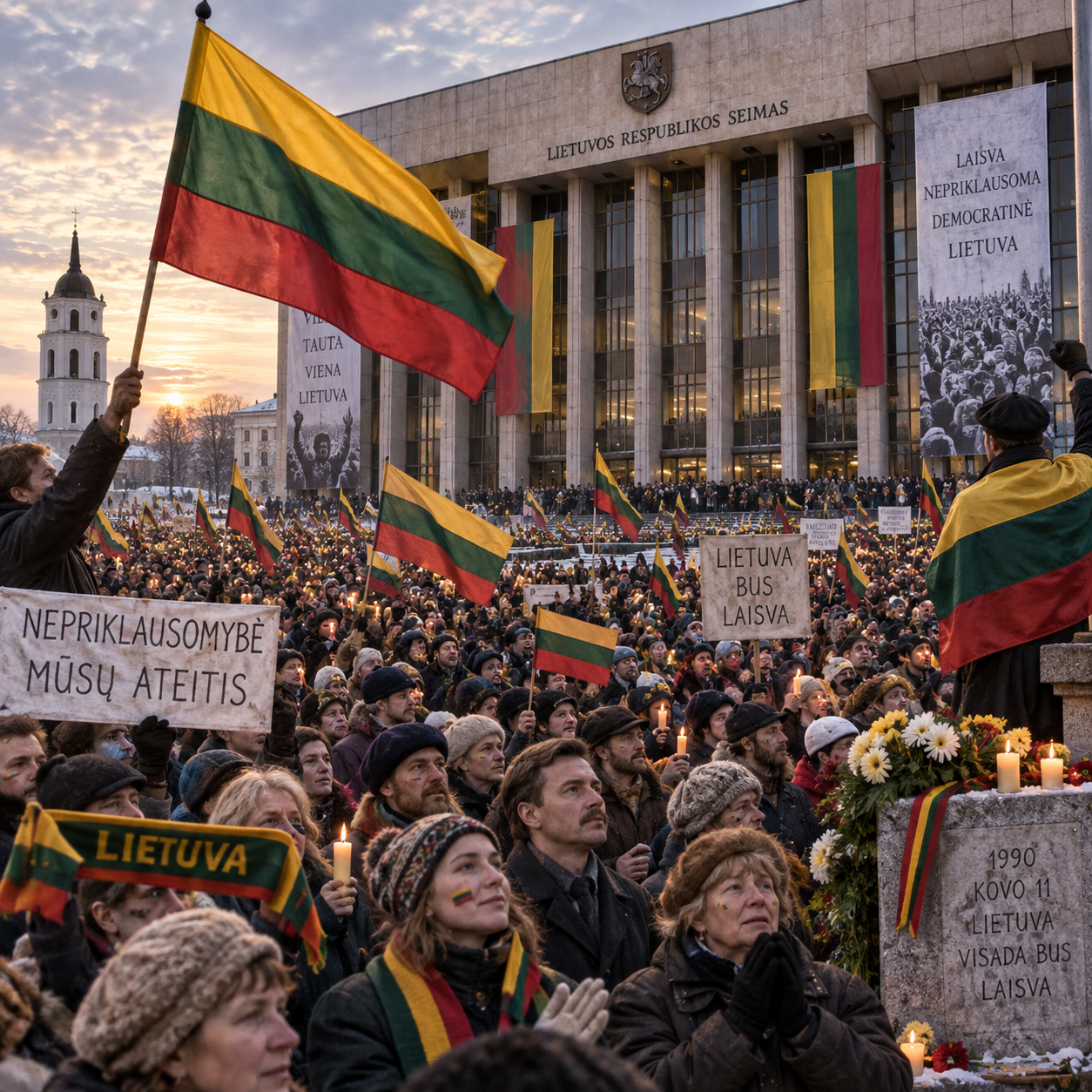
The evolution of political parties in post-Soviet Lithuania began with a national independence movement and developed into a competitive, coalition-based democracy. Since the restoration of Lithuanian independence in 1990, parties have been reshaped by constitutional reform, market transition, social change, European integration, leadership turnover, and changing voter expectations.
Lithuania’s party system cannot be explained simply as a contest between former communists and anti-communists. That divide mattered at first, but it soon overlapped with disputes about economic reform, national identity, welfare policy, relations with Russia, and the proper role of the state. The result has been a political system that is democratic and institutionally stable, yet organizationally fluid.
From Sąjūdis to Party Politics
Sąjūdis transformed the independence campaign into an organized political force, creating the first major divisions that shaped Lithuania’s post-Soviet parties. Its central achievement was to turn public support for national sovereignty into a mass movement capable of contesting power as the Soviet Union weakened.
Founded in 1988, Sąjūdis brought together intellectuals, cultural figures, reform-minded communists, environmental activists, and citizens demanding political freedoms. Its members did not share one detailed economic program. They were united primarily by the restoration of Lithuanian statehood, language rights, historical memory, and democratic self-government.
After the restoration of Lithuanian independence in 1990, that broad coalition faced a practical problem: governing requires choices. Should economic reform proceed quickly or gradually? How should property be returned or privatized? What social protections should remain? How should the new state treat former Communist Party officials?
These disagreements encouraged Sąjūdis to fragment into political currents. National-conservative forces emphasized sovereignty, historical continuity, and rapid integration with Western institutions. Other politicians sought a more socially protective transition and appealed to voters connected to the former Communist establishment. The independence movement therefore served as both a unifying force and an incubator for party competition.
Building a Multiparty Democracy After 1990
Lithuania built multiparty democracy through a constitutional republic, a directly elected president, and a unicameral parliament called the Seimas. Parties compete for seats in the Seimas, while governments normally depend on parliamentary majorities or negotiated coalitions.
The Constitution adopted in 1992 established the main institutional framework. Lithuania combined a parliamentary government with a presidency that has meaningful powers in foreign policy, national security, and the appointment process for the prime minister. This arrangement created two electoral arenas: parliamentary contests centered on party lists and constituencies, while presidential elections often focused more strongly on individual candidates.
Lithuania’s electoral system uses both proportional representation and single-member constituencies for Seimas elections. The mixed model encourages parties to build national organizations while also selecting recognizable local candidates. It can reward larger parties, but it also gives smaller movements a route into parliament when they develop a strong public profile or a concentrated regional base.
Formal institutions, however, do not determine political outcomes by themselves. Parties must recruit candidates, raise funds, create local branches, and negotiate policy agreements after elections. Lithuania’s early democratic experience showed that legal registration was relatively easy compared with building a durable organization. Many parties appeared, disappeared, merged, or changed names as voter loyalties shifted.
A useful way to understand this period is through three pressures: identity, the meaning of restored statehood; distribution, who benefited from economic transition; and governance, which parties could cooperate effectively. Different parties emphasized different pressures, and their balance changed over time.
The Rise of Competing Political Traditions
Post-Soviet Lithuanian politics developed around several traditions: nationalist-conservatism, post-communism, social democracy, liberalism, and agrarian representation. These traditions overlapped, and party labels often changed meaning as organizations adapted to new electoral conditions.
The Homeland Union, associated with the conservative wing of Sąjūdis and later with the political legacy of Vytautas Landsbergis, represented a strong commitment to national sovereignty, historical memory, market reform, and Western integration. It became a central force on the right. Its supporters often viewed rapid institutional and economic transformation as necessary to secure independence.
On the other side, the Democratic Labour Party of Lithuania emerged from the reorganization of the former Communist Party of Lithuania. It sought democratic legitimacy while retaining networks, personnel, and voters connected to the Soviet-era administrative and industrial system. Its success demonstrated that independence did not erase social interests associated with the old order.
The party later became part of the broader development of the Social Democratic Party of Lithuania. Social democratic politics increasingly focused on welfare provision, labor interests, public services, and a more gradual approach to inequality produced by economic reform. Yet the party’s practical positions varied according to coalition partners and the pressures of governing.
Liberal and conservative parties also developed distinct roles. Liberal parties generally promoted private enterprise, administrative modernization, lower barriers to business, and individual choice. Conservative parties placed greater emphasis on national identity, institutional authority, social continuity, and security. In practice, these categories were porous: a party could support economic liberalization while defending a socially traditional outlook.
Agrarian interests added another layer. Rural voters, agricultural communities, and regions outside the largest cities supported parties that emphasized land, local services, and protection from uneven modernization. These interests later helped sustain movements capable of acting as pivotal coalition partners.
Party Realignment and Coalition Government
Coalition governments became common because Lithuania’s mixed electoral system, fragmented party competition, and frequent party reorganization rarely produced a lasting single-party majority. Governing therefore depends on bargaining over ministries, budgets, legislative priorities, and leadership.
Realignment occurred through several mechanisms. Parties merged to pool voters and parliamentary resources. Others split after leadership disputes, ideological disagreements, or electoral defeats. Some rebranded to distance themselves from unpopular predecessors, while new organizations formed around prominent candidates rather than long-established membership networks.
The distinction between a party’s formal platform and its governing alliance is especially important. A liberal party might join a center-left cabinet to secure economic reforms. A conservative party might cooperate with an agrarian or protest movement on issues of national security and regional development. Coalition agreements often moderate ideological differences, but they can also make governments appear inconsistent to voters.
Coalition politics has both advantages and costs. Negotiation can broaden representation and prevent abrupt swings in policy. It also distributes responsibility across several parties. The cost is reduced clarity: voters may struggle to identify who was responsible for a decision, while small parties can gain influence beyond their share of the national vote.
Electoral setbacks have repeatedly encouraged organizational change. A party that loses support may replace its leadership, revise its policy language, or seek a merger. These changes help the system remain competitive, but they also weaken long-term party identification. Voters often recognize a party’s name or leader more readily than its membership structure or ideological history.
European Integration and Domestic Political Change
European integration pushed Lithuanian parties toward a broad consensus on Western orientation while leaving substantial disagreements over domestic policy. Membership in the European Union and NATO strengthened the country’s security and international position, but it did not eliminate competition over the costs and benefits of modernization.
Lithuania joined NATO and the European Union in 2004 after a long process of legal, economic, and institutional adjustment. Parties across much of the political spectrum treated these memberships as strategic goals linked to independence and national security. Cooperation with European institutions also encouraged reforms in public administration, regulation, judicial standards, and market governance.
Once membership was achieved, the political debate changed. Parties could no longer compete mainly over whether Lithuania should join Western institutions. They had to address how the country should use its place inside them. Disputes concerned European fiscal rules, energy security, agricultural support, labor mobility, migration, regional inequality, and the balance between national decision-making and EU coordination.
NATO membership likewise made defense policy a central area of continuity. Security concerns connected to Lithuania’s geography and history encouraged cooperation among parties that disagreed sharply on taxation, welfare, or cultural questions. European integration therefore narrowed some ideological disputes while making other domestic choices more visible.
For an accessible overview of Lithuania’s constitutional institutions, the official Seimas website provides parliamentary information and public records.
New Movements and Changing Voter Behaviour
New political movements have grown by combining personality-driven leadership, anti-establishment criticism, and targeted appeals to voters dissatisfied with traditional parties. Their rise reflects frustration with corruption, uneven economic development, public-service gaps, and the perceived distance between political institutions and everyday life.
Television, online media, and social networks have lowered the organizational barriers to entering politics. A movement can gain visibility without first building a nationwide membership structure. This has helped public figures, municipal leaders, and protest-oriented groups compete with older parties.
Such movements often use flexible language rather than a fixed ideology. They may combine demands for stronger national control, social protection, cleaner government, and lower taxes. Their appeal is frequently strongest when established parties appear interchangeable or absorbed in coalition bargaining.
However, electoral success does not automatically create durable party organization. New movements must convert attention into local branches, reliable candidates, policy expertise, and parliamentary discipline. Without those foundations, a movement may lose support quickly when its leader becomes unpopular or coalition promises prove difficult to fulfill.
Continuity and Change in Lithuania’s Party System
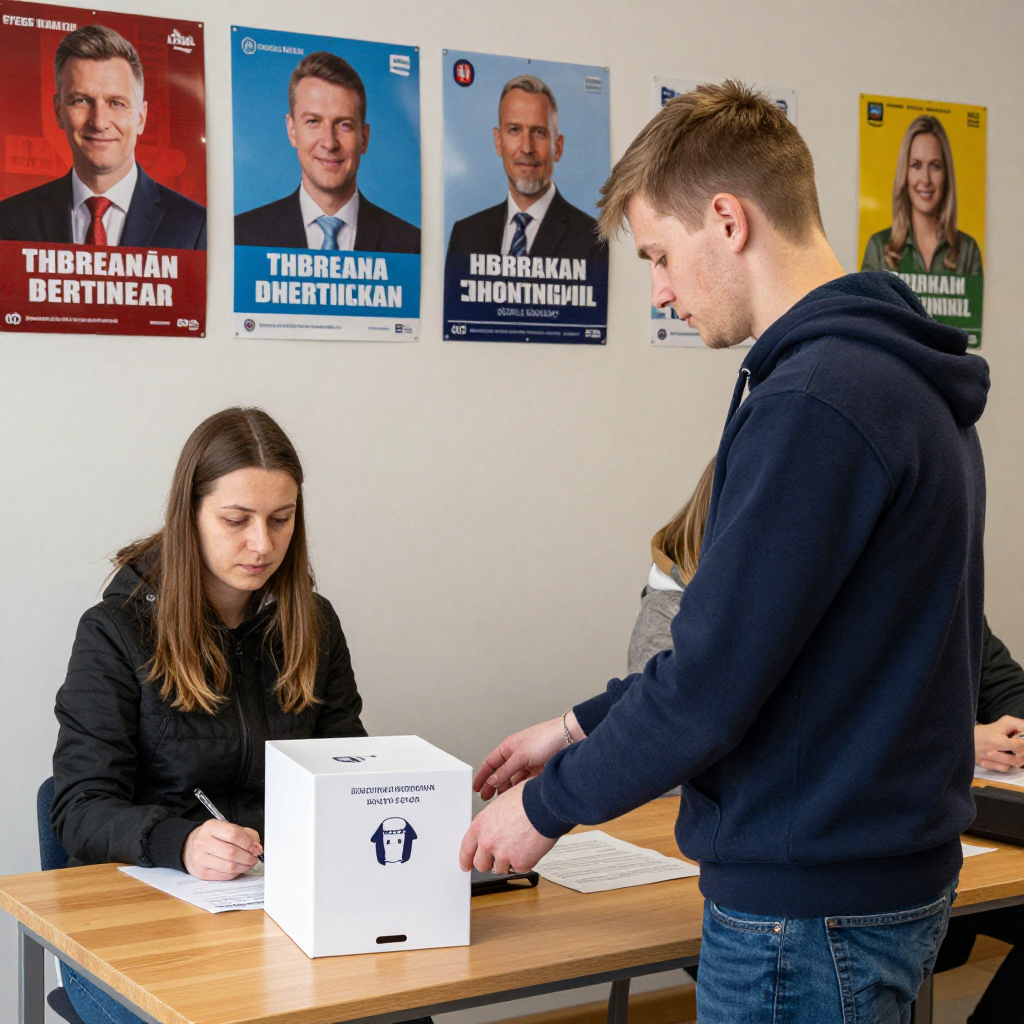
The long-term pattern is democratic consolidation combined with organizational instability. Lithuania has maintained competitive elections, peaceful transfers of power, and broad support for constitutional government, while parties continue to merge, split, rebrand, and form shifting coalitions.
Several conclusions stand out. First, independence remains a foundational reference point, but parties interpret its meaning differently. For conservatives, it often emphasizes sovereignty and historical continuity. For social democrats, it can also mean social security and equal citizenship. For liberals, it may highlight individual freedom and integration with European markets.
Second, the old post-communist versus anti-communist divide became less decisive as generations changed and economic issues gained prominence. It still influences memory and political identity, but it no longer explains every alliance or policy dispute.
Third, coalition dependence is a structural feature rather than a temporary malfunction. The Seimas reflects a plural society in which urban, rural, professional, generational, and regional interests do not always align. Coalition governments are the practical mechanism for converting that diversity into executive authority.
Finally, newer movements are not simply replacing traditional parties. They pressure established organizations to modernize, communicate differently, and respond to neglected concerns. Traditional parties still provide experience, parliamentary networks, and policy capacity, while newer groups bring urgency and outsider credibility.
The evolution of political parties in post-Soviet Lithuania is therefore best understood as an ongoing process of adaptation. The country moved from a mass independence movement to institutionalized party competition, then toward a more fluid system shaped by coalition politics, European integration, and changing voter behaviour. Its democratic system has consolidated, even as the parties within it continue to change.
Frequently Asked Questions
How did Sąjūdis influence Lithuania’s first political parties?
Sąjūdis created the mass political infrastructure and national goals that made independence possible. After 1990, disagreements within the movement over economic reform, social policy, and the treatment of former Communist officials helped produce distinct conservative, social democratic, and liberal currents.
Which political traditions shaped post-Soviet Lithuanian politics?
The main traditions were nationalist-conservatism, post-communism, social democracy, liberalism, and agrarian regional representation. Their boundaries changed as parties merged, rebranded, and entered different coalition governments.
Why have coalition governments been common in Lithuania?
Lithuania’s mixed electoral system encourages representation from several parties, while party fragmentation makes single-party majorities uncommon. Coalition agreements allow governments to form, although they can make responsibility for policy less clear.
How has European integration affected Lithuanian parties?
EU and NATO membership created broad agreement on Lithuania’s Western orientation. After accession, competition shifted toward questions about economic policy, security spending, energy, migration, welfare, and the division of authority between Lithuania and European institutions.
Are newer political movements replacing traditional parties?
Usually, they are supplementing and pressuring traditional parties rather than replacing them completely. New movements can win support quickly, but durable influence requires organization, policy expertise, and the ability to govern through coalitions.