Key Figures in Lithuania's Independence Struggle: Their Legacy and Impact
The Road to Independence — A Movement Built on People
Lithuania's path to independence was not handed down by a single charismatic leader or a party decree. It grew from the ground up — from kitchen-table conversations, university lecture halls, and eventually massive public squares — during one of the most politically volatile decades of the twentieth century.
By the late 1980s, the Lithuanian Soviet Socialist Republic was showing the cracks that were fracturing the entire Soviet bloc. Mikhail Gorbachev's glasnost had opened a narrow window, and Lithuanians moved through it with extraordinary speed. What made the Lithuanian case distinctive was the fusion of cultural identity, intellectual leadership, and grassroots civic energy into a single coherent force.
The figures who emerged from this moment were not interchangeable. Each represented a different strand of the movement: one came from music and culture, another from economics and pragmatism, a third from philosophy and moral argument. Together, they built something that no single strand could have achieved alone.
Vytautas Landsbergis — The Cultural Leader Who Became a Symbol
Vytautas Landsbergis is the name most closely associated with Lithuania's declaration of independence. A musicologist by training and a professor by profession, he became the chairman of Sąjūdis — the Lithuanian Reform Movement — and later the first head of state of restored independent Lithuania.
His background in culture was not incidental. The independence movement drew heavily on Lithuanian national identity, language, and historical memory, and Landsbergis understood that terrain intuitively. When Sąjūdis was founded in 1988, it was not a political party in the conventional sense but a broad civic coalition. Landsbergis gave it a face that was recognizable, principled, and — crucially — not associated with the old Communist apparatus.
On March 11, 1990, the Lithuanian Supreme Soviet, now dominated by Sąjūdis deputies, adopted the Act of the Re-Establishment of the State of Lithuania. Landsbergis presided over that session. The act was the first such declaration by any Soviet republic, and Moscow's response was swift: an economic blockade and, eventually, military force.
Through the months of pressure that followed, Landsbergis held a firm line. His refusal to suspend the independence declaration — even under considerable international pressure to do so — proved decisive. He remains a contested figure in Lithuanian politics today, but his role in that defining moment is not seriously disputed.
Kazimiera Prunskienė and the Politics of Transition
Kazimiera Prunskienė served as Lithuania's first Prime Minister after the March 11 declaration, making her one of the few women in Europe at the time to hold such a position. Her task was arguably the hardest of any independence-era leader: keeping a newly declared state economically functional while the Soviet Union applied maximum pressure.
An economist by background, Prunskienė understood that political independence without economic viability was fragile. She traveled internationally to build recognition and support, meeting foreign leaders at a time when most Western governments were still reluctant to formally acknowledge Lithuania's independence.
Her tenure ended in January 1991 amid a dispute over price reforms — a reminder that the pressures of governing a transitional state were intense and often unforgiving. But her contribution to establishing the institutional architecture of independent Lithuania, and to placing it on the international map, was substantial.
Algirdas Brazauskas — Reform from Within the System
Algirdas Brazauskas represented a different and sometimes misunderstood path to Lithuanian independence. As the leader of the Lithuanian Communist Party, he made the striking decision in 1989 to break with the Communist Party of the Soviet Union — an act that had few precedents in Soviet history.
This separation was not merely symbolic. It signaled that even within the formal structures of Soviet power, Lithuanian national identity had become the dominant political reality. Brazauskas was pragmatic where Landsbergis was principled, and the two men often clashed. But that tension reflected something real about the independence movement: it was broad enough to contain both.
Brazauskas later became Lithuania's first directly elected president in 1993, a result that surprised many observers in the West who expected the independence-era figures to dominate democratic politics. His election showed that Lithuanian voters were capable of distinguishing between the struggle for independence and the ongoing work of governance — a sign of democratic maturity.
Intellectuals and Civic Architects — Romualdas Ozolas and Others
The independence movement's moral and ideological foundation was built largely by people whose names are less familiar internationally but whose influence was profound inside Lithuania. Romualdas Ozolas was perhaps the most significant of these civic architects.
A philosopher and one of the co-founders of Sąjūdis, Ozolas brought a rigorous intellectual framework to the movement at a time when it needed more than slogans. He argued for Lithuanian independence not simply as a national aspiration but as a moral and philosophical necessity — a restoration of natural rights that had been suppressed for decades.
Writers, historians, and cultural figures played a parallel role. The independence movement was, in part, a cultural awakening before it became a political one. The recovery of suppressed history, the public use of the Lithuanian language in official settings, and the revival of national symbols all preceded the formal political declarations. These were not decorative acts — they were the substance of what the movement was fighting for.
The January 1991 Crisis and the Role of Ordinary Citizens
The January Events of 1991 remain the most dramatic test of Lithuania's independence. Soviet troops moved on Vilnius, seizing the television tower and killing fourteen civilians who had gathered to defend it. The parliament building was surrounded. Landsbergis broadcast appeals for international attention from inside.
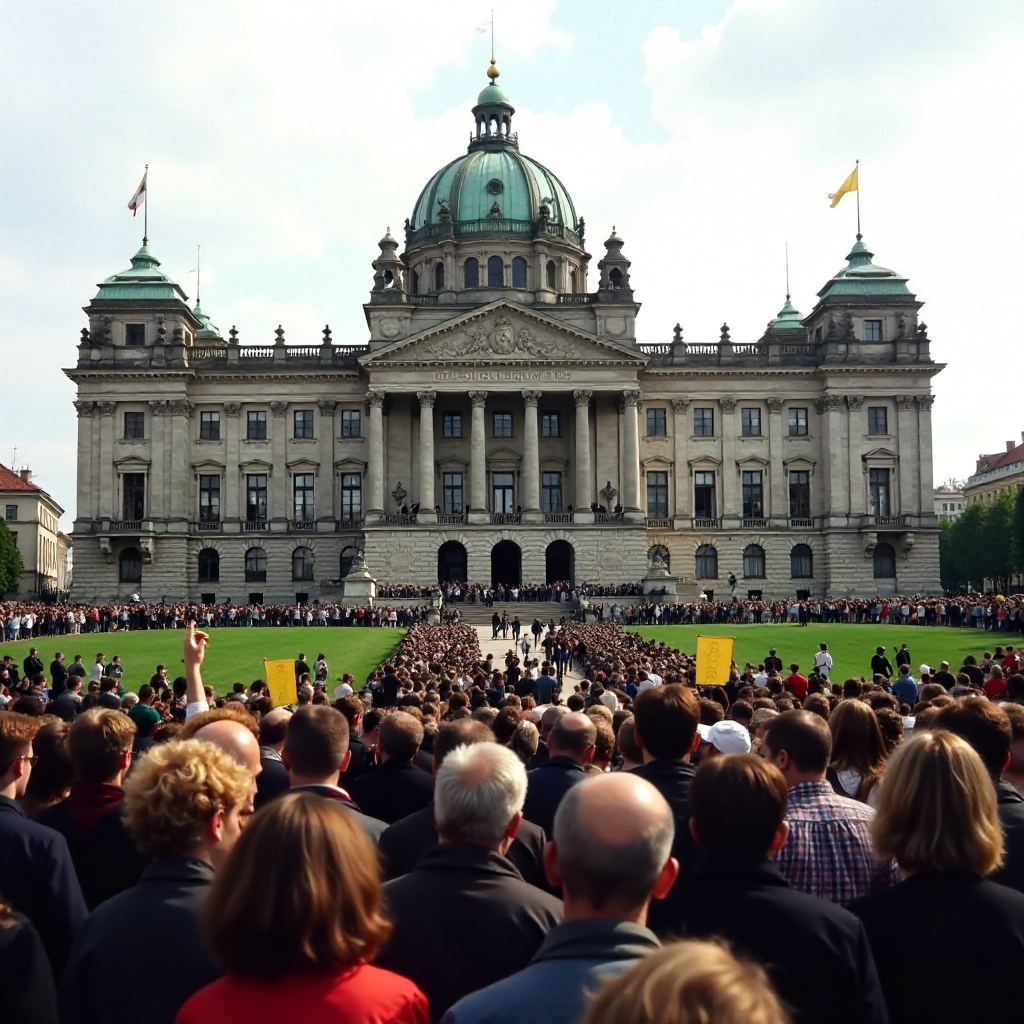
What stopped a full military crackdown was not military resistance — Lithuania had none — but the sheer scale of civic presence. Tens of thousands of people came to stand around the parliament building, forming human barriers with their bodies. This was civic resistance in its most literal form.
The Baltic Way of August 1989 had already demonstrated this capacity. Nearly two million people across Lithuania, Latvia, and Estonia formed a human chain stretching almost 700 kilometers, connecting the three capitals in a single unbroken line. No political leader organized that. Communities did.
The January crisis showed the world that Lithuania's independence was not a decision made by a small political elite. It was a commitment held by ordinary people willing to stand in the cold against armed soldiers. That distinction matters enormously for understanding what kind of independence Lithuania achieved.
Legacy — How These Figures Shaped Modern Lithuanian Civic Identity
The independence-era leaders shaped Lithuanian democratic culture in ways that extend well beyond their specific political decisions. Their most durable contribution may be the model of civic engagement they demonstrated and legitimized.
The nonviolent character of the independence struggle — maintained even under direct military threat — established a civic norm that has influenced Lithuanian political culture ever since. Disputes are resolved through institutions, through public pressure, through elections. The January 1991 crisis, in particular, is remembered not as a moment of victimhood but as a moment of collective courage and restraint.
Vytautas Landsbergis remained active in European Parliament politics well into his eighties, continuing to speak on questions of Russian foreign policy and Baltic security. His persistence reflects a generation that understood independence as an ongoing project, not a completed one.
For younger Lithuanians, these figures occupy a complicated space — revered as founders, sometimes critiqued as political actors, always present in the national conversation. That complexity is itself a sign of democratic health: a society that can argue about its heroes without abandoning them.
Frequently Asked Questions
Who was the most important leader in Lithuania's independence movement?
Vytautas Landsbergis is most often cited as the central figure, having led Sąjūdis and presided over the March 11, 1990 independence declaration. However, the movement's strength came from a combination of leaders, intellectuals, and ordinary citizens — no single person can fully account for its success.
What was Sąjūdis and who founded it?
Sąjūdis — formally the Lithuanian Reform Movement — was founded in June 1988 as a broad civic coalition bringing together intellectuals, cultural figures, and reform-minded citizens. Romualdas Ozolas was among its key intellectual founders; Vytautas Landsbergis became its most visible public leader.
What happened during the January Events of 1991?
In January 1991, Soviet military forces attempted to suppress Lithuanian independence by seizing strategic sites in Vilnius, including the television tower. Fourteen civilians were killed. Tens of thousands of Lithuanian citizens formed human shields around key buildings, and the crackdown ultimately failed to reverse independence.
How did Lithuania's independence figures influence the country's democratic development?
They established norms of nonviolent civic resistance, institutional legitimacy, and public accountability that shaped Lithuania's democratic culture. The diversity of approaches — cultural, reformist, intellectual — created a pluralistic foundation for democratic politics rather than a single dominant political tradition.
Are any independence-era leaders still active in Lithuanian public life?
Vytautas Landsbergis remained a prominent voice in European politics and public debate into the 2020s, particularly on issues of Baltic security and Russian foreign policy. Several other figures from the independence era have continued to contribute to Lithuanian civic and intellectual life in various capacities.