Historical Memory and National Identity in Modern Lithuania
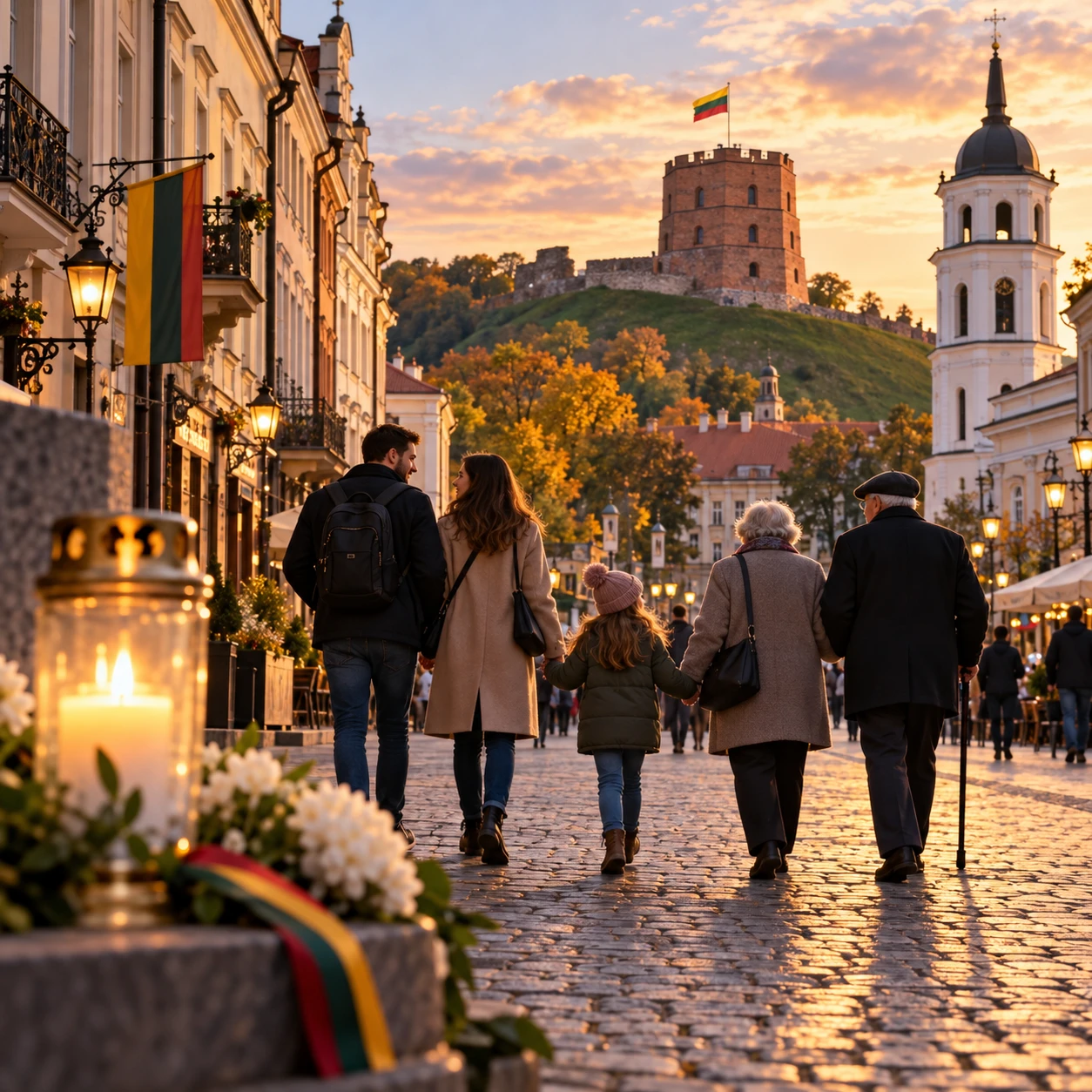
In Lithuania, the past is present in school lessons, memorial ceremonies, family stories, museums, and debates about public monuments. Historical memory helps explain how people understand national identity and civic belonging, but it is not a single, settled account shared by everyone.
Why historical memory matters to national identity
Historical memory is the way a community interprets and passes on significant events from its past. In Lithuania, it can support national identity by connecting ideas of statehood, cultural survival, and political freedom to people’s lives today.
Collective memory is not the same as a complete historical record. Historians examine evidence and debate its meaning; public memory selects events and gives them significance through commemoration, education, and family narratives. Those choices can strengthen solidarity, but they can also leave some experiences less visible.
For many Lithuanians, the idea of an independent state carries particular weight because sovereignty was lost and later restored. Yet national identity also includes language, regional traditions, religious and secular life, and the experiences of communities with different histories. Memory is most useful in civic life when it invites informed participation rather than requiring everyone to share one interpretation.
A layered past: statehood, occupation, and independence
Lithuania’s history includes periods of statehood, foreign rule, and renewed independence; it is not one uninterrupted national story. The Grand Duchy of Lithuania, a major medieval and early modern polity, is an important reference point, but its diverse population and changing borders cannot be simply equated with the modern republic.
Later partitions brought Lithuanian lands under the Russian Empire. Imperial rule affected political life, education, and the use of the Lithuanian language, while cultural and political movements developed in response. These experiences contribute to accounts of national survival, though people’s lives and loyalties varied by place, class, religion, and period.
After the First World War, Lithuania established an independent republic. In 1940, the Soviet Union occupied and annexed the country. Nazi Germany occupied Lithuania from 1941 to 1944, and Soviet control returned as the Second World War ended. These were distinct regimes and periods, with different policies and victims. Lithuania restored its independence in 1990; Soviet authorities used force in January 1991, and international recognition followed as the Soviet Union disintegrated.
Remembering this sequence means holding together both continuity and rupture. It recognizes the value of earlier statehood without projecting today’s national categories unchanged onto the past.
Remembering the Soviet and Nazi periods
Lithuanian memory of the Soviet and Nazi occupations includes deportation, repression, resistance, collaboration, and mass murder, but the two occupations must not be conflated. The Holocaust was the systematic genocide of Europe’s Jews by Nazi Germany and its collaborators; in Lithuania, Jewish communities were devastated, and local participation in persecution and murder is part of the historical record.
Soviet rule brought political repression, arrests, deportations, censorship, and pressure on religious and civic institutions. Armed partisans resisted Soviet control after the war, while other people adapted, served in institutions, or tried to protect their families. These experiences cannot be reduced to a simple division between heroes and collaborators. Actions took place under coercive conditions, but context does not erase responsibility.
Before the Nazi occupation, Lithuanian Jews were an integral part of the country’s social and cultural life. Their near destruction is not only a story of loss to Jewish communities; it is central to the history of Lithuania itself. Responsible remembrance identifies victims, perpetrators, and the institutions involved, and avoids presenting the Holocaust as interchangeable with Soviet repression.
Resistance commemorations often focus on the postwar partisan struggle and the later peaceful movement for independence. Their meaning is strongest when they also make room for difficult questions: who resisted, who collaborated, who suffered, and whose accounts were excluded or suppressed.
How memory enters public life
Historical memory enters public life through education, commemorations, museums, monuments, and the preservation of historical sites. These settings shape what people encounter, while the sources and perspectives they include influence how the past is understood.
Schools provide timelines and evidence that help students distinguish the Grand Duchy, imperial rule, the occupations, and the restoration of independence. Teachers can deepen that learning by comparing documents, testimony, maps, and scholarly interpretations. A useful classroom question is not only “What happened?” but also “Whose evidence survives, and how has its interpretation changed?”
Public commemorations give abstract events a shared place and date. Lithuania marks the restoration of independence on 11 March, and ceremonies and memorials also remember victims of Soviet deportations and the Holocaust. Museums and memorial sites can connect personal testimony to historical records, while monuments make choices about which figures and events receive public honor.
Those choices are not neutral, and changing a monument or exhibit can prompt disagreement. A careful public-history approach explains the decision, preserves relevant evidence, and includes affected communities where possible. Commemoration works best as an invitation to learn, not as a substitute for historical inquiry.
Different memories, contested meanings
Accounts of Lithuania’s past differ because people encounter different events, family histories, and sources. Generational, regional, minority, and diaspora perspectives can all shape what feels most urgent or familiar.
Older people may have direct memories of Soviet rule or the transition to independence; younger generations often meet those periods through school, media, and relatives’ stories. Rural and urban communities can preserve different local histories. Polish, Jewish, Russian-speaking, and other communities may remember the same place through distinct experiences, while no community has a single viewpoint.
The Lithuanian diaspora also contributes to national memory. Communities abroad have preserved language, cultural institutions, and accounts of exile, and many people returned or maintained ties after independence. Distance can help sustain traditions, though diaspora narratives may reflect different political contexts from those inside Lithuania.
Political debate can bring neglected evidence into view, but it can also turn history into a test of loyalty. A more reliable way to discuss contested memory is to separate three questions: what evidence supports an event, how historians interpret it, and what values people bring to its public commemoration. Disagreement over meaning does not make all factual claims equally sound.
Memory in modern Lithuania
Historical memory shapes modern Lithuanian civic identity by informing how people understand sovereignty, democracy, minority rights, and the responsibilities of public institutions. It offers reference points for present choices, but it cannot decide those choices on its own.
The restoration of independence in 1990–1991 is widely associated with civic mobilization and the defense of self-government. Its legacy can encourage people to value democratic participation and resist political coercion. At the same time, invoking national survival should not silence scrutiny of the state or narrow the meaning of belonging to one ethnicity or family history.
A practical way to assess a public claim about the past is to ask: What happened? Identify the event and its dates. What supports the account? Look for archival records, credible scholarship, and testimony considered in context. What is being remembered now? Notice whose experience the ceremony, exhibit, or political speech highlights, and whose it leaves out.
This approach keeps history connected to civic life without forcing a single national narrative. Lithuania’s past can foster belonging precisely because it is examined honestly: through evidence, attention to victims and responsibility, and room for the country’s diverse communities to take part in public remembrance.