How Lithuanian Civic Movements Shaped the Fall of the Soviet Union
When the Soviet Union finally unraveled in 1991, historians searched for a single tipping point. They found not a military defeat or an economic shock, but a chain of civic acts — songs, human chains, candlelit vigils, and a parliament vote in Vilnius. Lithuania did not wait for history to happen to it. Its people made history happen, and the rest of the Soviet bloc took notice.
A Nation Under Occupation — The Historical Grievance Fueling Civic Action
Lithuanian civic mobilization was powered by a specific, documented injustice: the Molotov–Ribbentrop Pact of 1939. The secret protocol between Nazi Germany and the Soviet Union handed the Baltic states to Moscow without their consent, leading to occupation, mass deportations, and the systematic suppression of Lithuanian language, culture, and identity.
That wound never fully closed. Across five decades of Soviet rule, Lithuanian families preserved banned books, taught their children the pre-occupation national anthem, and kept alive a collective memory that official Soviet history tried to erase. This was not passive nostalgia — it was a slow-burning form of civic resistance.
When Mikhail Gorbachev introduced glasnost and perestroika in the mid-1980s, he intended to reform the Soviet system, not dismantle it. In Lithuania, the relative opening of public discourse had a different effect. It gave people permission to say out loud what they had been saying in private for decades. The historical grievance was already there. Glasnost simply removed the lock from the door.
The Birth of Sąjūdis — From Cultural Club to Political Force
Sąjūdis, the Lithuanian Reform Movement, was founded in June 1988 — not as a political party, but as a civic initiative. That distinction matters enormously. Its founding members included intellectuals, artists, scientists, and ordinary citizens who gathered initially to discuss cultural and environmental concerns within the space glasnost had opened.
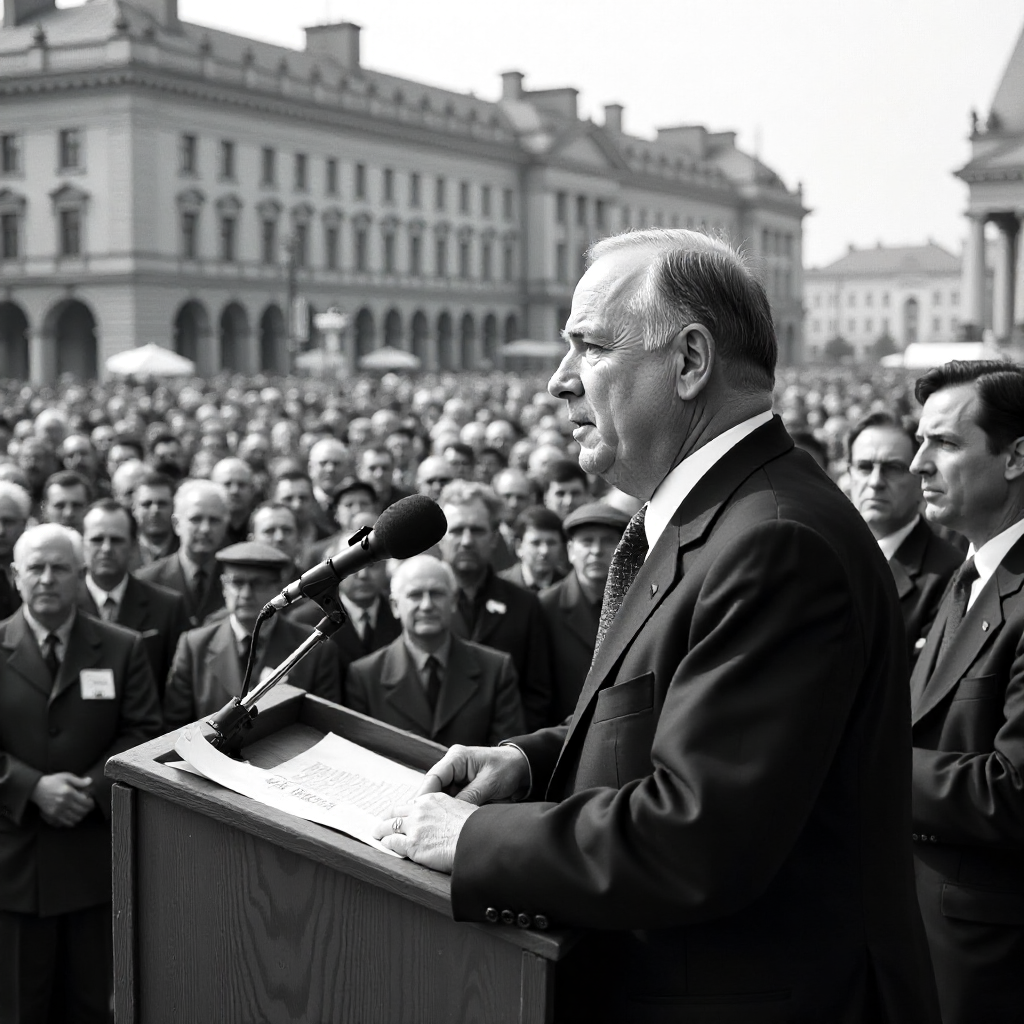
Within months, Sąjūdis had transformed into something the Soviet system had no ready response to: a mass civic movement with genuine popular legitimacy. Membership swelled into the hundreds of thousands. Public meetings in Vilnius drew crowds that would have been unthinkable just two years earlier. The movement operated transparently, published its own newspaper, and built local chapters across the country.
Vytautas Landsbergis, a musicologist by training, emerged as its most prominent leader — a figure whose cultural background was itself a statement. This was not a movement of career politicians. It was led by a man who had spent his life studying Lithuanian composers, which made him, paradoxically, harder for Moscow to dismiss as a dangerous radical.
Sąjūdis channeled public frustration through a disciplined civic framework: petitions, public debates, cultural festivals, and electoral participation. When elections to the Soviet Congress of People's Deputies were held in 1989, Sąjūdis candidates swept the Lithuanian seats. The movement had moved from the street to the institution without abandoning either.
The Baltic Way — When Civic Protest Became a Global Symbol
The Baltic Way on August 23, 1989 — the 50th anniversary of the Molotov–Ribbentrop Pact — stands as one of the most extraordinary acts of civic protest in modern history. Approximately two million people formed a human chain stretching nearly 700 kilometers across Estonia, Latvia, and Lithuania, from Tallinn through Riga to Vilnius.
The logistics alone were staggering. No social media existed. Organizers coordinated across three Soviet republics using phone trees, local radio, and word of mouth. People drove hours to take their place in the chain, often standing for hours in the August heat. The act was entirely peaceful, visually undeniable, and impossible for Moscow to reframe as the work of a small extremist fringe.
The Baltic Way demonstrated something that civic movements often struggle to prove: that Baltic states solidarity was not manufactured by political leaders but reflected genuine popular will. Estonia, Latvia, and Lithuania had different languages, different histories, and different political traditions. Their coordinated action on that day sent a signal that transcended any single republic's grievance.
International media coverage was extensive. Images of the human chain circled the globe. The Soviet government issued an angry statement calling the event "nationalist hysteria" — a response that revealed more about Moscow's anxiety than it did about the demonstrators' intentions.
Declaring Independence — Civic Pressure Translated into Political Reality
The Act of the Re-Establishment of the State of Lithuania, adopted on March 11, 1990, was the direct product of years of civic organizing. The Lithuanian Supreme Soviet — now dominated by Sąjūdis-aligned deputies — voted to restore Lithuanian statehood, becoming the first Soviet republic to declare independence from the USSR.
The vote was 124 in favor, none against, with six abstentions. That near-unanimity reflected the political reality that Sąjūdis had built from below. By the time the formal declaration was made, the civic infrastructure — the public consensus, the organized networks, the demonstrated international attention — was already in place.
Moscow's response was economic blockade. The Soviet government cut off oil and gas supplies to Lithuania, hoping to starve the declaration into submission. Lithuanian citizens responded with conservation measures and mutual support networks. The blockade lasted months and caused real hardship. It did not reverse the declaration.
The January 1991 Crisis — Civic Courage Against Soviet Force
The most dangerous test came in January 1991, when Soviet forces moved to crush Lithuanian independence by force. On the night of January 12–13, Soviet paratroopers and tanks moved on the Vilnius TV Tower and the parliament building. Fourteen civilians were killed at the TV Tower. Hundreds more were injured.
What the Soviet forces encountered was not an armed resistance but something harder to defeat: unarmed citizens who had gathered to form a human shield around key institutions. Thousands of Lithuanians stood between the tanks and the parliament building, singing national songs, holding candles, and refusing to move. Landsbergis broadcast from inside the parliament building, calling on citizens to come and bear witness.
The January Events of 1991 were filmed, photographed, and reported internationally. The images of Soviet tanks facing unarmed civilians in Vilnius did enormous damage to whatever remained of the Soviet Union's international credibility. Rather than ending Lithuania's independence movement, the crackdown accelerated its international recognition.
The civic logic was precise: by refusing violence, Lithuanian defenders denied Soviet forces the pretext they needed to justify a full military occupation. Nonviolent resistance was not just a moral choice — it was a strategic one.
Lithuania's Ripple Effect — Inspiring Movements Across the Soviet Bloc
Lithuania's role as a first mover among Soviet republics gave its example outsized significance. When the March 11 declaration survived Moscow's economic pressure, other republics drew a clear lesson: independence was achievable. Latvia and Estonia followed with their own declarations. Georgia, Armenia, and Ukraine began accelerating their own independence processes.
The Soviet Supreme Soviet in Moscow found itself in an impossible position. Crushing Lithuania militarily would confirm the worst Western assessments of Soviet intentions and destroy Gorbachev's diplomatic standing. Accepting Lithuanian independence would invite a cascade of similar declarations. There was no clean option, because Lithuanian civic society had already changed the facts on the ground.
What Lithuania demonstrated was that the Soviet system's central vulnerability was not military but political: it depended on the consent — or at least the passivity — of its subject peoples. Once a critical mass of citizens withdrew that consent openly, visibly, and nonviolently, the system's tools of control became simultaneously more brutal and less effective.
Lessons from Lithuania — What Civic Movements Can Achieve
Lithuania's independence movement offers a durable framework for understanding how civic action translates into political change. Three elements were decisive.
First, historical memory as political resource. The Molotov–Ribbentrop Pact gave Lithuanians a concrete, documented injustice to organize around — not an abstract ideology, but a specific event with verifiable consequences. Movements that can anchor their claims in documented history are harder to dismiss.
Second, the strategic sequencing of Sąjūdis: cultural mobilization first, then electoral participation, then formal political action. Each stage built legitimacy for the next. By the time independence was declared, the civic groundwork was so extensive that the declaration reflected reality rather than aspiring to create it.
Third, the discipline of nonviolence — particularly under pressure. During the January 1991 crisis, the temptation to respond to Soviet force with force must have been real. Lithuanian citizens held their ground without abandoning their method. That discipline turned a military confrontation into a political and moral one, which Lithuania was far better positioned to win.
None of this happened automatically or easily. Thousands of ordinary Lithuanians made individual decisions — to attend a meeting, to stand in a human chain, to walk toward a tank — that collectively produced a historical outcome. That is what civic movements, at their most effective, actually look like.
Frequently Asked Questions
What was Sąjūdis and why was it significant?
Sąjūdis was a Lithuanian civic reform movement founded in 1988. It was significant because it channeled mass popular support into organized political pressure, ultimately driving Lithuania's independence declaration in 1990 — the first such declaration by any Soviet republic.
How did the Baltic Way contribute to Soviet collapse?
The Baltic Way — a 700-kilometer human chain linking Estonia, Latvia, and Lithuania on August 23, 1989 — demonstrated coordinated, peaceful mass resistance across three republics. Its global media coverage undermined Soviet narratives and emboldened independence movements throughout the USSR.
Did Lithuania's independence declaration directly trigger the fall of the USSR?
Lithuania's March 11, 1990 declaration was a catalyst rather than a single cause. It proved independence was achievable, inspired other republics, and placed Moscow in an untenable political position — contributing directly to the conditions that led to the USSR's dissolution in December 1991.
How did ordinary citizens participate in Lithuania's independence movement?
Citizens participated through Sąjūdis membership, attending public rallies, standing in the Baltic Way human chain, forming human shields around key buildings during the January 1991 crisis, and voting for Sąjūdis candidates in elections. The movement was genuinely mass-based, not elite-driven.
What role did nonviolent resistance play in Lithuania's success?
Nonviolent resistance was both a moral commitment and a strategic tool. By refusing to respond to Soviet force with violence — most visibly during the January 1991 crackdown — Lithuanians denied Moscow a pretext for full military suppression and turned international opinion decisively in their favor.